Game Over Back to School SVG Design: A Comprehensive Guide for Digital Cutters
The transition from summer break to the academic year often triggers a specific blend of excitement and anxiety, particularly for students and parents alike. In recent years, this sentiment has been captured through digital art, with the Game over Back to school Svg design emerging as a popular motif for custom apparel and decor. This concept merges the nostalgic aesthetic of retro gaming with the fresh start of a new semester, creating a unique visual language that resonates with tech-savvy families and educators.
For those exploring digital crafting resources, understanding the nuances of this specific design category is essential before purchasing or downloading files. Unlike generic clipart, these vector-based assets are engineered for precision cutting machines, offering a level of versatility that traditional print methods cannot match. This guide evaluates the utility, technical specifications, and practical applications of the Game over Back to school Svg design, helping you determine if it fits your current project needs.
Understanding the Core Concept and Distinctive Features
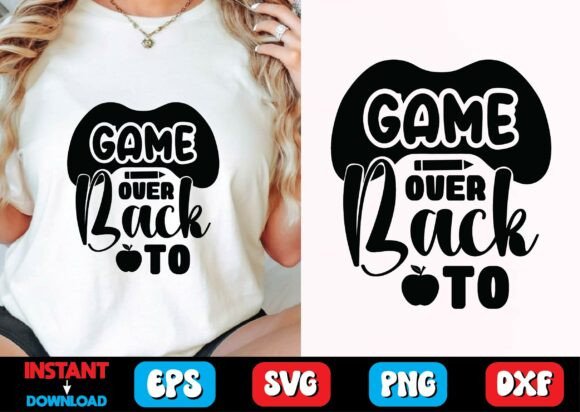
The Game over Back to school Svg design is not merely a collection of letters; it is a thematic statement designed for digital fabrication. The core appeal lies in its ability to communicate a playful narrative about ending summer leisure and beginning the structured routine of learning. Visually, these designs often incorporate pixelated fonts, joystick imagery, or controller motifs alongside the central text.
What distinguishes this category from standard "Back to School" graphics is the target demographic engagement. While traditional designs might feature apples, pencils, or chalkboards, the gaming-inspired approach appeals specifically to children who identify with video games, as well as adults who grew up during the golden age of arcade gaming. This dual appeal makes it a versatile choice for multi-generational households or for teachers looking to connect with modern student culture.
From a technical standpoint, the value of this design is anchored in its file format. As an SVG (Scalable Vector Graphics) file, the artwork is composed of mathematical paths rather than fixed pixels. This allows the image to be scaled to any size without losing resolution, a critical feature for users working with different substrates ranging from small tote bags to large vinyl banners.
Technical Specifications and File Composition
When evaluating a digital download for a cutting machine, the contents of the package are just as important as the visual design itself. A comprehensive resource typically provides a ZIP folder containing multiple file types to ensure compatibility across various software ecosystems. The standard suite usually includes:
- SVG File: The primary vector format required by most modern cutting software. It retains editability, allowing users to separate elements, change colors, or adjust layers before cutting.
- DXF File: A drawing exchange format widely supported by Silhouette Studio and other CAD-based tools. This ensures that users of non-Cricut machines can utilize the design effectively.
- PNG File: A raster image provided at 300 dpi with a transparent background. This is essential for printing processes like sublimation or for use in graphic design software where vector editing is not required.
- EPS File: An Encapsulated PostScript file that serves as a high-quality vector backup, often used for professional printing workflows or advanced illustration software.
This multi-format approach eliminates the need for users to convert files themselves, reducing the risk of errors and ensuring that the design remains crisp regardless of the output method.
Comparing Formats and Cutting Approaches
Selecting the right tool for your project involves understanding how the Game over Back to school Svg design interacts with different hardware and materials. The decision often comes down to the type of cutting machine available and the intended application of the final product.
Versus Traditional Printing Methods
One of the primary tradeoffs when choosing a digital cut file versus ordering pre-printed merchandise is customization. Pre-printed t-shirts offer convenience but lack personalization. By using a vector design, you gain the ability to tailor the color palette to match specific team uniforms, classroom themes, or family matching sets. For instance, while a store-bought shirt might come in standard navy blue, a DIY approach allows you to use heat transfer vinyl (HTV) in neon green or metallic gold to make the "Game Over" text pop.
However, this flexibility requires more effort. The user must own or rent a cutting machine, possess knowledge of material handling, and perform the weeding process (removing excess vinyl). For users seeking immediate gratification without technical setup, commercial printing services may be preferable. Conversely, for hobbyists and small business owners, the per-unit cost of producing items via cutting machines is significantly lower, making the initial investment in equipment and files highly cost-effective for bulk orders.
Software Compatibility and Workflow
Different cutting platforms handle vector files differently. Cricut Design Space and Silhouette Studio are the industry leaders, each with their own strengths. The inclusion of both SVG and DXF files in the download package is a strategic advantage here. If you are a Cricut user, the SVG file integrates seamlessly into Design Space, allowing for easy layer manipulation. If you prefer Silhouette Studio, the DXF file ensures that complex curves and text remain editable within that specific environment.
Sometimes, users encounter issues where text does not convert correctly upon import. A robust design file mitigates this by providing a PNG version as a fallback. While a PNG cannot be edited as vectors, it guarantees that the visual appearance remains intact if the vector conversion fails. This redundancy is a hallmark of a high-quality digital product.
Evaluating Use Cases and Application Scenarios
The versatility of the Game over Back to school Svg design extends far beyond simple clothing. Its adaptability makes it suitable for a wide array of projects, provided the user selects the appropriate material and cutting technique.
Apparel and Wearables
The most common application is on T-shirts, hoodies, and hats. The design works exceptionally well for men, women, kids, and babies, allowing for family coordination. The "Game Over" theme is particularly effective for "Birthday Girl" or birthday celebrations occurring near the start of the school year, bridging the gap between celebration and education. When applying this to fabric, it is crucial to consider the texture of the material; smooth cotton blends hold HTV better than rough, textured fabrics which may interfere with the adhesive bond.
Home Decor and Paper Crafting
Beyond textiles, these vector files are ideal for paper crafting and home decor. Users can create posters, greeting cards, and invitations featuring the design. Because the SVG allows for precise scaling, the same file can generate a small sticker for a water bottle or a large banner for a classroom door. The inclusion of a high-resolution PNG is vital here for inkjet printing on cardstock or photo paper.
Additionally, the design is frequently adapted for hard surfaces. Using permanent vinyl, users can apply the graphic to mugs, totes, laptops, and car windows. This expands the potential audience, making the design relevant for office supplies, teacher gifts, and student accessories. The transparency of the background in the provided PNG file ensures that no white boxes appear around the text when printed or applied to dark-colored surfaces.
Limitations and Considerations
While the design is highly adaptable, there are limitations to consider. The complexity of the "pixel" elements in some game-themed designs can pose challenges for beginners. Intricate details may require longer cutting times and more patience during the weeding process. If the lines are too thin, they may tear or lift off the substrate over time, especially after washing or frequent handling.
Furthermore, it is important to remember that this is an instant download product. There is no physical inventory to ship, which means the user is responsible for acquiring the necessary blank products (shirts, mugs, etc.) and materials (vinyl, paper, ink). This model offers speed and variety but shifts the logistical burden entirely onto the creator.
Making the Right Choice for Your Project
Deciding whether to invest in a Game over Back to school Svg design depends on your specific goals and resources. If you are a parent looking to create a one-off shirt for a child who loves gaming, this digital file is likely the perfect solution. It offers a personalized touch that mass-market retailers cannot replicate, and the cost is minimal compared to buying custom-made garments.
For crafters and small business owners, the value proposition increases. The ability to produce unlimited variations of the design from a single purchase allows for scalability. You can create a line of matching shirts for a sports team, a set of branded totes for a school event, or a collection of holiday decorations. The inclusion of multiple file formats ensures that your workflow remains efficient regardless of the tools you choose to employ.
However, if you have no interest in crafting, do not own a cutting machine, or require a professionally finished product with warranties, this digital asset may not be the right fit. In such cases, searching for pre-printed items or hiring a local print shop would be more practical. The design is a tool for creation, not a finished product itself.
In conclusion, the Game over Back to school Svg design represents a thoughtful intersection of nostalgia, technology, and education. By providing a robust set of file formats and a distinct visual theme, it empowers users to create meaningful, customized items for the start of the academic year. Whether for a fun family activity or a professional side hustle, the key to success lies in understanding the capabilities of the file and matching them to the right materials and techniques.